
Change one choice and watch the whole meal update.
Pastry base · Standard Sauce · Tomato sauce Proteins · Pepperoni Serving size · 2 slices 517 kcalThe calorie counter you don't have to live in
Not less food — different food: more filling, more varied. One month of logging and a read of it, and the food data collection is finished; your weight trend takes it from there.

Not less food — different food
Calk forbids nothing. It shows what to replace inside the meals you already eat, and what to add: one part of the dish gives way to another, so the same plate keeps you full longer. Below are three signals the report uses; the evidence behind them differs in weight.
1Fewer calories per gram
When the calorie density of every dish was cut by a quarter, 24 young women ate 575 kcal a day less, and hunger and fullness ratings did not change Rolls 2006.
2More protein
Meta-analyses of controlled studies show a modest satiety effect and better preserved lean mass during weight loss Leidy 2015.
3More fiber
In a series of systematic reviews, the largest risk reductions across several outcomes fell between 25 and 29 grams of fiber a day Reynolds 2019.
Why not restriction? A diet lowers weight while the deficit holds. The trouble starts afterwards: temporary rules end, while the changes in appetite and energy expenditure last. A familiar dish you have changed asks for far less ongoing attention. Why diets don't work, and what to change in your food instead.
Build it once — two taps from then on
A meal template is a familiar dish broken into the few decisions that change it. Pick the template on the home screen and tap “Eat” when everything is as usual. Pesto instead of tomato sauce on today's pizza? Change only the sauce; the crust, cheese, toppings and portion stay in place while the whole meal recalculates.
Below is a simplified example of the Calk interface.
Where do the numbers come from? Calk combines official food tables, specialist publications, product labels and recipe checks into one checked food catalog. See how Calk builds and checks its food data.
Your first month is free
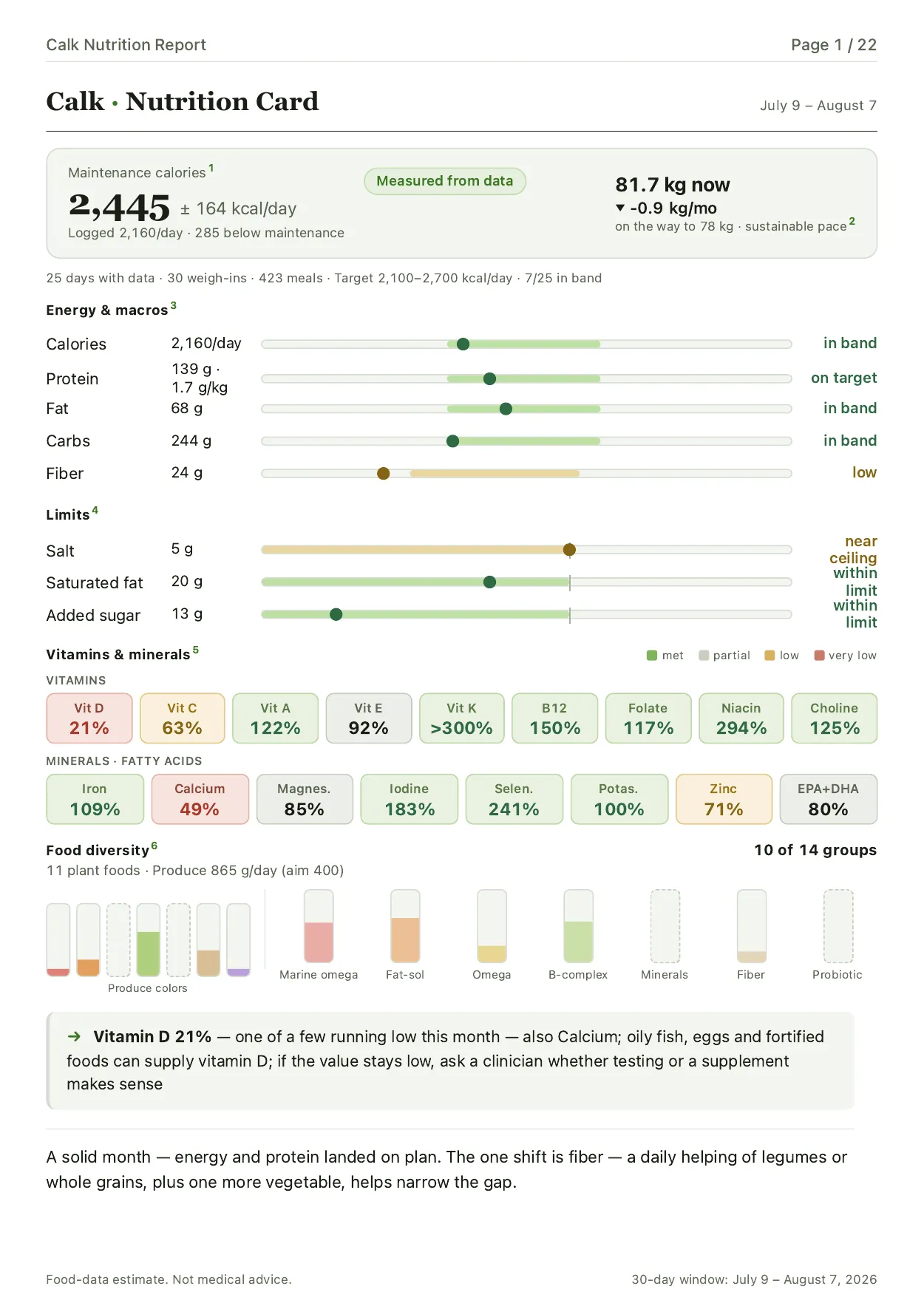
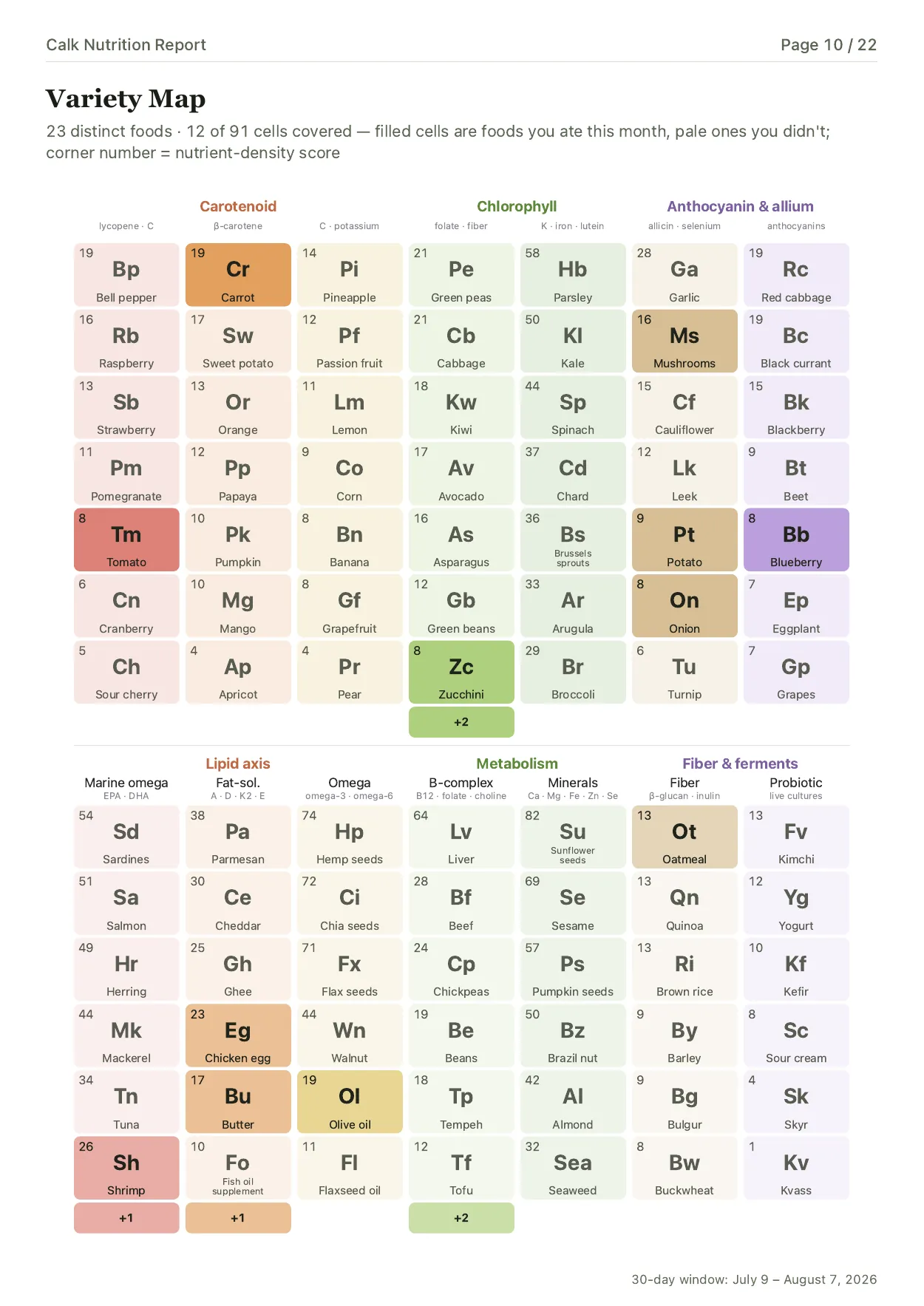
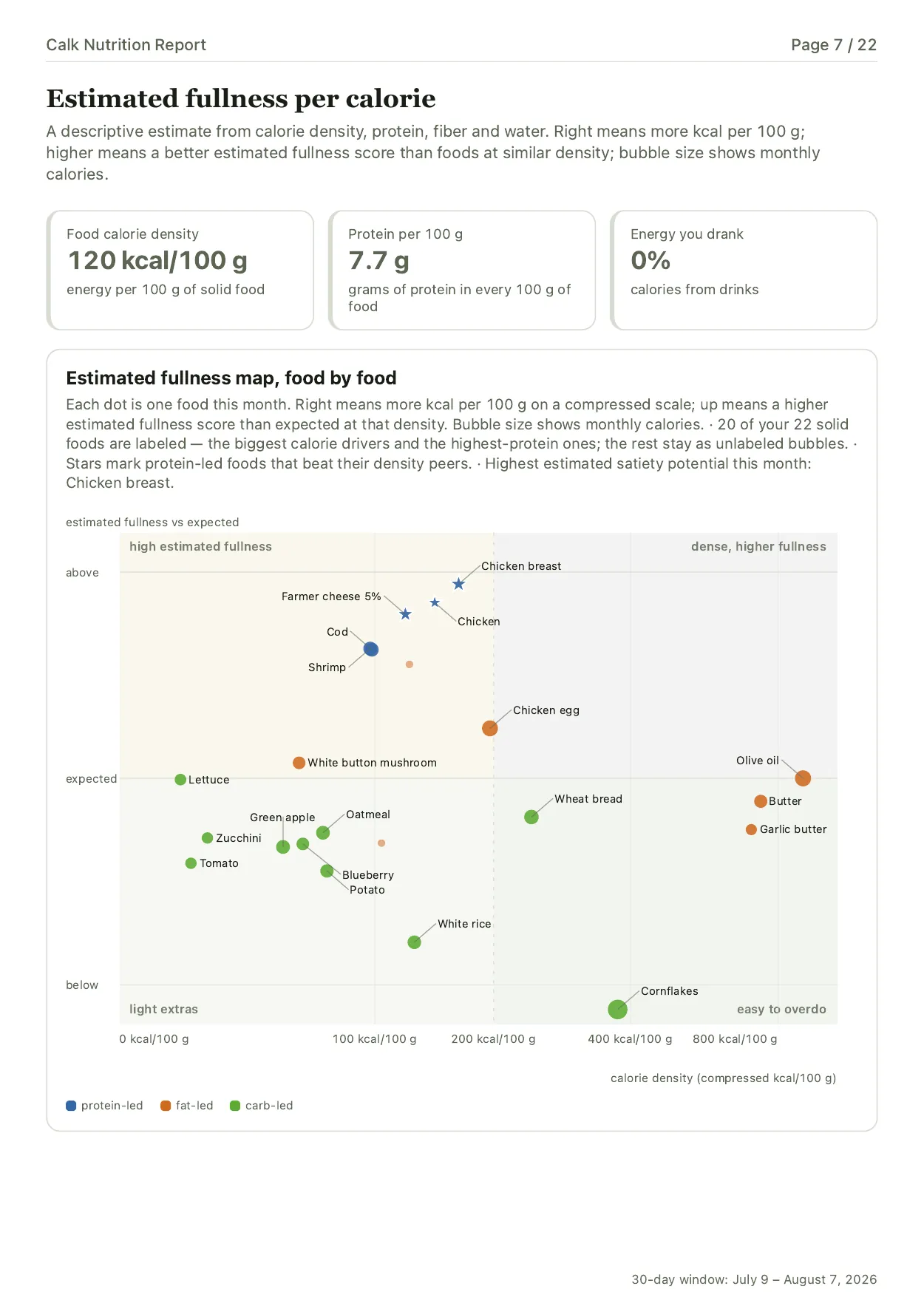
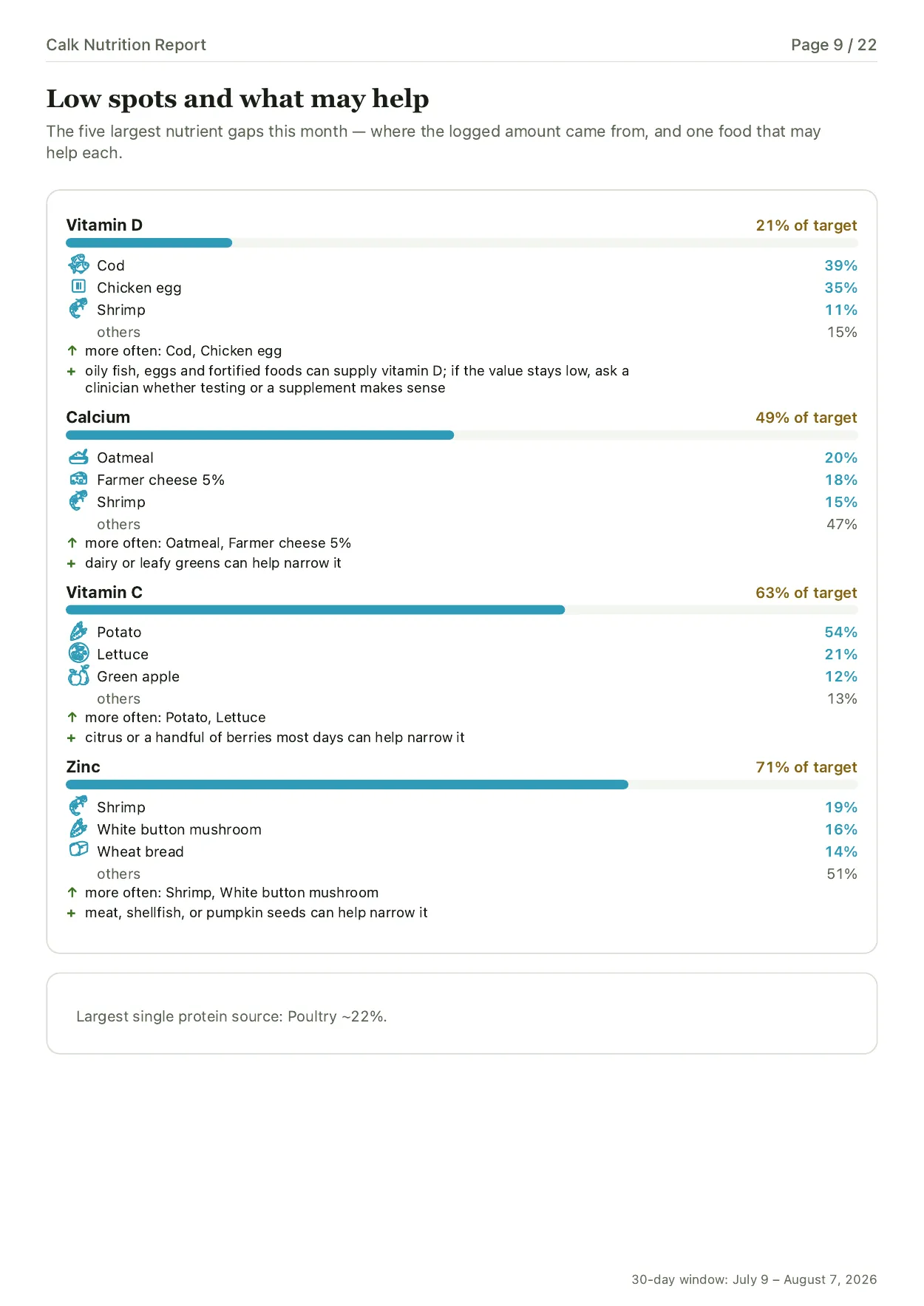
The monthly read is what the logging is for
After at least 20 complete food-log days and 10 days of weight data in one 30-day window, Calk can read the ingredients and cooking choices behind the totals. There is rarely much to change: a handful of meals repeat often enough to define the month. The report shows them from four practical angles:
- Your nutrition at a glance. Calories, macros, vitamins, minerals, variety and the main takeaway from the month.
- How varied your food really is. Food groups, plant variety and the easiest gaps to fill.
- Which foods are more filling. How calorie density, protein, fiber and water shape estimated fullness.
- What to add and what to replace. Which repeating meals a change would move most, and which familiar foods fit.
The core tracker is free
Free for ongoing use
Food logging, daily calorie and macro targets, weight entry and the weight-trend chart stay free. So does a shareable seven-day Variety Map.
Observations for your first 30 days
Your first 30 days include your first Nutrition Report and full access to the Observations section. Later reports and continued access to it are part of the paid tier.
Private, offline and ad-free
Food and weight logging run on your device without an internet connection. Calk has no ads and never will.
Calk is available on iPhone, iPad, and Android.



Open the example report
See the overview, the estimated maintenance calories and the conclusion. →
See a Variety Map
Turn seven days of food into a picture of your dietary variety. →
Coming from another tracker?
See why Calk uses an editable meal template instead of barcode, photo AI and an endless search database. →
Frequently asked
What is Calk?
Calk is a calorie counter built around editable meal templates. You log familiar meals quickly, change the ingredients that changed, and use a focused period of tracking to get a Nutrition Report: it shows your repeating meals and what to add or replace in them. Once you have picked the changes, the food data collection is finished, and your weight trend tells you when a new short food check is worth doing.
How is this different from a diet?
Calk has no forbidden foods, no menu and no meal plan. What changes is the composition of familiar meals: fewer calories per gram, more protein and fiber. A restriction stops working the moment it ends, while a familiar dish you have changed keeps repeating on its own. More in why diets don’t work.
Can you count calories without a kitchen scale?
Yes. A meal template lets you choose the ingredients, cooking method, additions and a useful portion estimate. You can weigh an unfamiliar dish once if you want a reference, but Calk does not require a scale at every meal.
Do you have to log every day?
No. The first report needs at least 20 complete food-log days and weight data on at least 10 different days within one 30-day window. After that, you can step back from daily food logging and keep an eye on your weight trend.
What can I use for free?
Food logging, daily calorie and macro targets, weight entry and the weight-trend chart are free, and so is a shareable seven-day Variety Map. During your first 30 days, you also get your first Nutrition Report and full access to the Observations section at no charge. Later Nutrition Reports and continued access to Observations are part of the paid tier.
How is Calk different from photo-AI apps?
A photo can recognize the visible food but cannot reliably recover the oil, sauce, sugar, salt or recipe inside it. Calk starts with an editable meal template, so those choices are explicit and the same action works predictably each time.
Does Calk replace a dietitian?
No. The Calk Nutrition Report is a detailed read of your food diary, not medical advice or a substitute for professional care.
How is Calk different from MyFitnessPal or Cal AI?
Most calorie trackers offer several ways to create a diary entry: database search, barcode, photo or voice. Calk uses one reusable meal template that you can adjust and eat again. See the full calorie-tracker comparison.
Latest articles

How to export your recipes from MyFitnessPal
You cannot move the MyFitnessPal recipe box through its official export. In Calk, log today’s dish instead of recreating the archive.
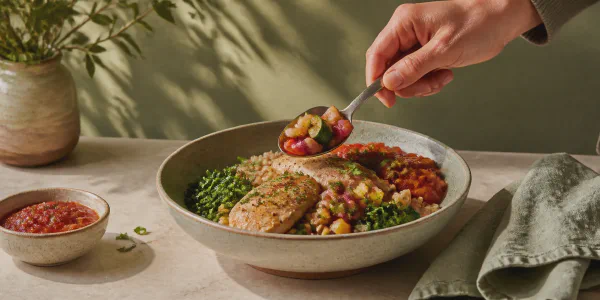
Why diets don't work — and what to change in your food instead
Temporary rules end. Appetite, energy expenditure and your old meals don’t. So change what the meals are made of.
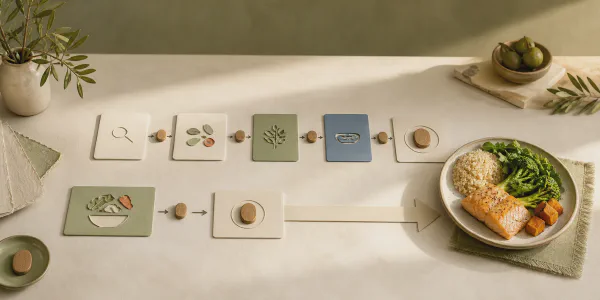
How many taps it takes to log food in Calk
An entry is either from scratch — the dish still has to be found — or from your own tab, where it already sits. Both are counted.